Weird Niche, Big Paycheck: How 'Boring' Streamers Are Quietly Crushing It
Photo: Pach Brothers, restored by Adam Cuerden, Public domain, via Wikimedia Commons
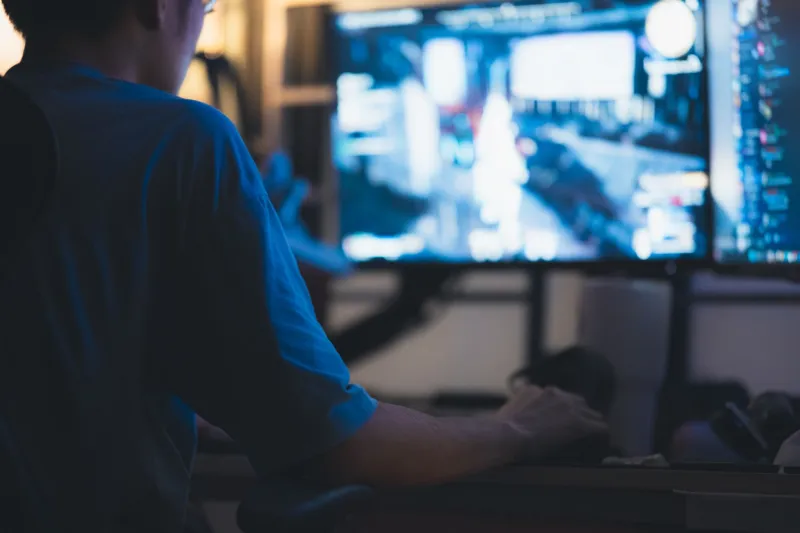
Let's be honest — when most people picture a successful streamer, they picture someone screaming at a battle royale, popping off headshots, and racking up clip-worthy moments at 2 a.m. That image is so baked into streaming culture that it almost feels like a prerequisite. Want to make it? Pick a trending game. Chase the algorithm. Pray you go viral.
But here's the thing: a growing number of creators are completely ignoring that playbook — and they're doing better because of it.
We're talking about the woodworker quietly turning a lathe on a Tuesday afternoon. The self-taught programmer walking viewers through a buggy Python script. The home cook who doesn't have a Michelin star and doesn't pretend to. These streamers aren't chasing trends. They're just doing their thing, live, in front of an audience that can't get enough of it.
The Saturation Problem Nobody Talks About
Here's a number worth sitting with: at any given moment, thousands of people are live on the most popular platforms streaming the exact same game. If you fire up a stream of whatever title is trending this week, you're not entering a community — you're entering a traffic jam.
Discoverability in oversaturated categories is brutal, especially for newer creators. You can do everything right — great lighting, solid mic, engaging personality — and still get buried under a mountain of established channels with years of audience loyalty already locked in.
Niche streamers sidestep this entirely. When someone searches for live woodworking content, or wants to watch a real person do meal prep in real time, the competition drops dramatically. You're not fighting for scraps. You're often one of a handful of options, which means the audience that finds you actually finds you — and tends to stick around.
Tighter Community, Higher Revenue Per Viewer
One of the most counterintuitive things about niche streaming is that smaller audiences often generate better revenue per viewer than massive mainstream channels.
Take Marcus, a 34-year-old furniture maker from rural Ohio who started streaming his workshop sessions about two years ago. He wasn't trying to build a brand. He just thought it'd be cool to share the process of building a dining table from scratch. Today, he averages around 200 concurrent viewers — a number that would feel discouraging to someone chasing gaming fame — but his subscribers are deeply engaged. They ask questions, they tip during tricky joinery moments, they buy his digital plans and follow-along guides. His monthly revenue from streaming consistently outpaces what many creators with ten times his viewership pull in from ad revenue alone.
"These people aren't just watching me," Marcus told us. "They're genuinely interested in learning. When someone tips during a stream, it usually comes with a question or a comment. It feels like a workshop, not a performance."
That sense of participation is the secret ingredient. Niche audiences don't tune in passively. They show up because they care about the subject matter, which makes them far more likely to convert on subscriptions, tips, merch, and any digital products a creator offers.
The Authenticity Advantage
There's something else going on here that's harder to quantify but impossible to ignore: niche streamers are almost always more authentic by default.
When you're streaming a trending game, there's a performance pressure built in. You're expected to react a certain way, hit certain beats, keep energy high. The content format has guardrails shaped by what's already popular.
When you're streaming yourself refinishing a thrift store dresser, there are no guardrails. You're just you, doing a thing you actually know how to do and genuinely enjoy. That authenticity radiates through the screen, and audiences — especially younger US viewers who've grown up watching polished, produced content — are increasingly hungry for something that feels real.
Jasmine, a 27-year-old personal trainer in Atlanta, started streaming her own workouts after getting frustrated with fitness content that felt either too aspirational or too gimmicky. "I wasn't trying to be a fitness influencer," she said. "I just wanted to work out and maybe have some company." Within eight months, she had a community of regulars who showed up every morning like it was a group class. She now offers virtual coaching packages to viewers who converted from casual watchers to paying clients — a revenue stream that has nothing to do with ad rates or follower counts.
Less Competition, More Creative Freedom
Another underrated perk of niche streaming: you get to write the rules.
In oversaturated categories, content norms are already established. Audiences have expectations shaped by years of watching the biggest names in that space. As a newcomer, you're implicitly measured against those standards.
In an overlooked niche, you're building the template. You decide what a great coding stream looks like. You set the tone for how a home fermentation channel feels. That creative freedom isn't just fun — it's a genuine competitive moat. Nobody can copy what you're building if you're the one who built it first.
Dev, a software engineer in Seattle, started streaming his side project development sessions partly as a way to stay accountable. What he found was a community of other developers who showed up to code alongside him, ask questions, and debug in real time. He's since turned that audience into a subscriber base for a paid newsletter and a private Discord — both of which he credits directly to the trust built through hours of honest, unscripted live streams.
How to Find Your Niche Sweet Spot
If you're sitting on a skill or hobby that you've been dismissing as "too niche" or "not interesting enough," here's a simple reframe: the more specific your content, the more meaningful it becomes to the people who actually want it.
A few things worth considering as you think about your angle:
- What do you already do that other people ask you about? That's usually a signal.
- Is there a live element to your craft? Process-based content — building, cooking, training, creating — tends to translate well to streaming because the in-progress nature keeps viewers engaged.
- Can your audience participate? The more interactive your niche, the stronger the community you can build around it.
- What would you stream even if nobody was watching? That's probably your most sustainable content.
The Takeaway
The creators quietly winning on LiveCastr and across the streaming landscape right now aren't always the ones with the loudest setups or the most trending content. A lot of them are just people who got good at something, decided to share it live, and discovered that the internet has a surprisingly deep appetite for exactly what they were offering.
Your niche isn't a limitation. It might be the whole point.