Midnight Money: How Streaming After Dark Is Quietly Out-Earning Prime Time
Everybody tells you the same thing when you're starting out: stream during peak hours. Hit the window when traffic is highest. Compete for eyeballs when eyeballs are plentiful. It sounds logical — more viewers, more money, right?
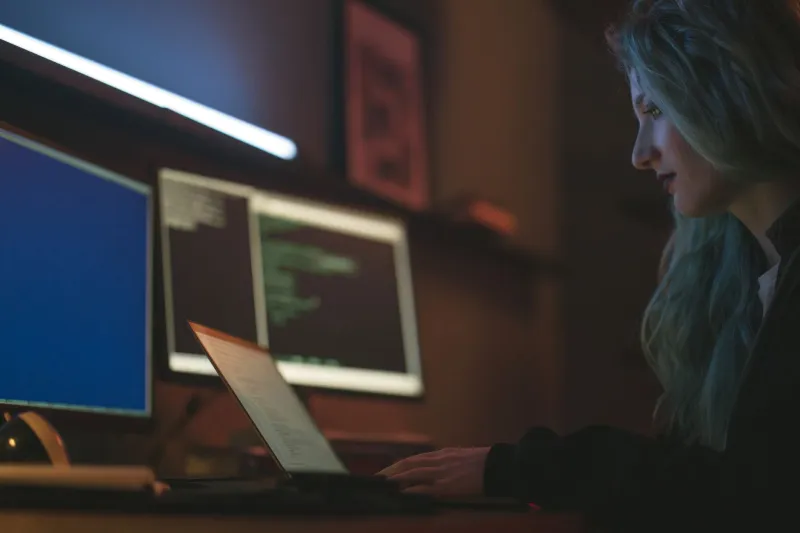
Except a growing number of creators on platforms like Twitch, YouTube Live, and right here on LiveCastr are blowing that assumption apart. They're going live at midnight, 1 AM, sometimes 3 in the morning — and they're not just surviving. They're out-earning streamers with five times the concurrent viewership.
This isn't a fluke. It's a pattern, and it's worth understanding.
The Overcrowding Problem Nobody Talks About Enough
Prime time — roughly 7 PM to 11 PM Eastern — is a bloodbath. Thousands of streamers are competing for the same finite pool of channel-surfing viewers. Discovery algorithms get noisy. New creators get buried. Even established streamers often find their growth plateauing because the competition for attention is relentless.
After midnight, the landscape changes completely. The hobbyists log off. The casual streamers wrap up. What you're left with is a much smaller field of creators broadcasting to a much smaller — but radically different — audience.
And that difference is where the money lives.
Who's Actually Watching at 3 AM?
Let's talk about the late-night viewer, because they're not who you might assume. Yes, there are insomniacs and night-shift workers. But there's also a massive segment of deeply passionate fans — people who want to watch their favorite creator and simply can't do it at 8 PM because of work, kids, school, or life. When they finally get their window, they're not passively scrolling. They're committed.
There's also a strong international dimension. A streamer going live at 2 AM Eastern is hitting prime viewing hours in Europe and parts of Latin America. That's not a niche angle anymore — that's a genuine strategic advantage for creators willing to reframe their schedule.
Beyond geography, late-night audiences tend to skew older — mid-20s to mid-30s — which correlates with higher disposable income and a greater willingness to spend on subscriptions, channel points, and one-time donations. They're not watching on a school night with a 10 PM curfew. They're adults with credit cards and a genuine desire to support the creators they love.
The Psychology of the Late-Night Tip
Here's something streamers who've made the switch consistently report: late-night viewers tip differently. There's an intimacy to a small chat room at 1 AM that you simply cannot replicate in a 500-person stream during prime time. The creator knows your username. They respond to your message. You feel like a participant, not an audience member.
That psychological shift — from viewer to community member — is a documented driver of financial support in live streaming. People donate to people they feel connected to. And connection is exponentially easier to manufacture (in the best possible way) when the chat isn't moving at 200 messages per minute.
Streamers in this space often describe a "campfire effect" — a small group gathered around something warm and intimate, where everyone knows everyone else, and the host feels less like a performer and more like a friend hosting a late-night hang.
That's not an accident. That's a monetization environment.
Real Creators, Real Numbers
Take Marcus, a variety streamer out of Phoenix who spent two years grinding 7 PM slots with average concurrent viewership around 40. He was making roughly $300 a month in donations and subscriptions combined — respectable, but nowhere near sustainable.
After a scheduling conflict forced him to shift his streams to 11 PM and later, something unexpected happened. His viewer count dropped to around 22 on average — but his monthly revenue nearly doubled within six weeks. Fewer people were watching, but they were tipping more frequently, subscribing at higher tier levels, and staying for entire four-hour sessions instead of dropping in and out.
"It felt like I finally had a room instead of a hallway," he told us. "People stopped passing through. They stayed."
Or consider Deja, a music performer and DJ who streams live sets from her apartment in Atlanta. She experimented with late-night slots almost by accident — her day job kept her from going live until after 10 PM — and discovered that her 1 AM audience was made up largely of European listeners who were starting their Saturday mornings with her Friday night set. Her Patreon-equivalent subscriber count grew 60% in three months without any change to her content.
The Sponsorship Angle Most Creators Miss
Here's where it gets interesting from a business perspective: per-viewer sponsorship value can actually be higher for late-night streams than prime-time ones, depending on your niche and audience demographics.
Brands increasingly care about engagement rates and audience quality over raw viewer counts. A sponsor selling premium coffee, productivity software, or gaming peripherals would rather have 50 highly engaged, spending-age adults than 300 passive viewers who tuned in because you were at the top of a category list.
Late-night streamers with tight, loyal communities are starting to leverage this angle in their brand pitches — and it's working. The CPM math changes when you can demonstrate that your viewers actually watch and respond rather than just exist in the background.
Making the Switch: Practical Considerations
If you're thinking about testing late-night hours, a few things worth keeping in mind:
Don't abandon your current audience cold turkey. Announce the schedule shift in advance. Give your existing viewers a chance to adjust or at least understand the change. Losing goodwill from people who've already committed to you isn't worth the experiment.
Consistency matters even more at odd hours. Late-night audiences are often planning around you specifically. If you say you're going live at midnight on Thursdays, you need to be live at midnight on Thursdays. Reliability becomes your brand.
Lean into the intimacy. Don't try to perform for a crowd that isn't there. Smaller late-night audiences respond to authenticity, conversation, and a looser format. Let the energy of the hour inform the vibe of the stream.
Track your per-viewer metrics, not just totals. Revenue per viewer, subscription rate per viewer, donation frequency — these are the numbers that will tell you whether the shift is actually working. Chasing total viewer counts will mislead you.
The Bigger Picture
The late-night streaming phenomenon is really a story about what happens when creators stop trying to compete on the same terms as everyone else and start looking for the table with fewer players. It's not that prime time is wrong — it's that it's crowded, and crowded means you're fighting for scraps even when you're good.
The midnight window isn't for everyone. If you've got a family, a day job that starts at 6 AM, or a content style that genuinely needs a big live audience to function, it's probably not your move. But for the creator who's willing to flip their schedule and lean into the strange, intimate energy of late-night broadcasting, the upside is real — and increasingly well-documented.
Stream when nobody else is streaming. Build the room other people aren't building. The audience that shows up at 3 AM to watch you? They're not casual. They're yours.
And on LiveCastr, that kind of loyalty translates directly into income.